Top 5 Vietnam Tin Box Finishes for Cosmetics: A Curated Recommendation List
Top 5 Vietnam Tin Box Finishes for Cosmetics: A Curated Recommendation List
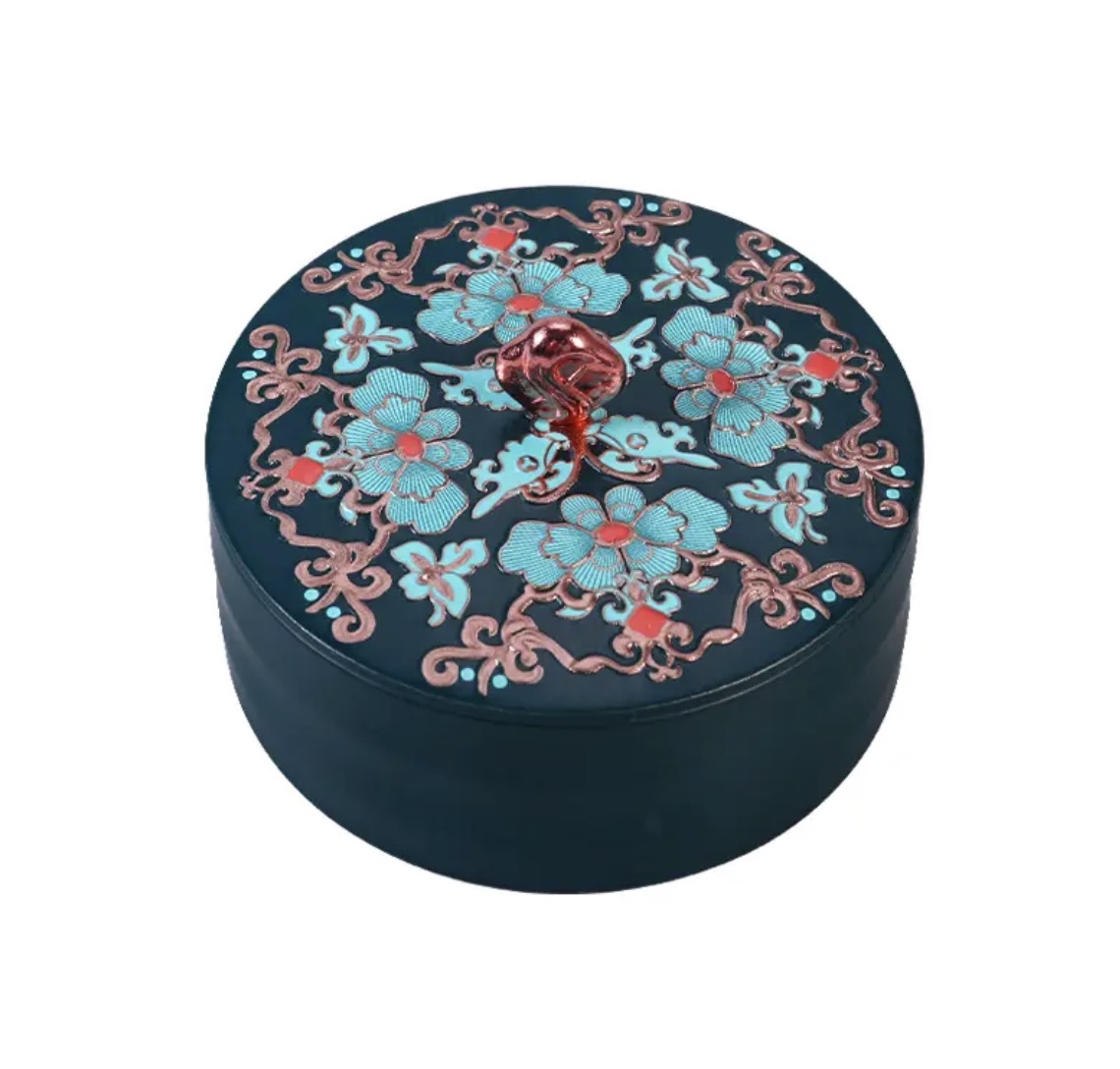
For a cosmetics brand sourcing metal packaging from Vietnam, the surface finish is the point at which a plain container becomes a shelf asset. It decides how printed artwork reads under retail lighting, how the tin feels in a customer's hand before the lid is opened, and how well the pack survives handling, transport and storage. This article presents a curated recommendation list of five surface finishes commonly specified for Vietnam cosmetics tin boxes, ordered by how each one balances shelf appeal, durability, and compatibility with the cosmetic product stored inside.
The five recommended finishes are high-gloss litho varnish, matte or satin varnish, soft-touch velvet coating, metallic finish with spot UV, and embossed or debossed relief. The list is written for procurement managers, brand owners and packaging engineers who must confirm a finish before artwork, tooling and purchase orders are frozen — and who need to understand what each option costs in process complexity, not only in appearance.
Problem Definition: Why Finish Decisions Fail Late in the Project
Surface finish is usually the last specification confirmed and the first one blamed when a shipment arrives. The failure pattern repeats across projects:
- The brief says "glossy" or "matte" without naming the process, so two suppliers quote two different things.
- The finish is chosen from a screen mock-up rather than from a physical tin, so colour, texture and glare are all approximations.
- Exterior appearance is specified in detail while the interior requirement — the surface that may sit near the formulation or its vapours — is left unaddressed.
- Additional finishing steps such as selective gloss or relief are discovered after the quotation, and the project is re-priced mid-schedule.
- No reference sample is retained, so neither buyer nor factory can resolve a quality dispute at inspection.
A finish decision that does not name the actual process — overall varnish, selective coating, tactile coating, or die-formed relief — cannot be quoted accurately, sampled consistently, or inspected at the factory gate. The result is a rework loop of artwork proofs, sample rounds and tooling revisions, and the delay lands on the product launch rather than on the packaging line.
There is also a compatibility risk that has nothing to do with appearance. A cosmetics tin is normally two different surfaces in one product: a decorative exterior and a functional interior. Where the fill is a fragrance-heavy solid, an essential oil blend or a wax-based formula, the interior specification deserves to be settled before the exterior finish is locked, because the exterior is the part buyers can see while the interior is the part the product actually lives in.
Industry Background: How Tin Box Finishes Are Produced in Vietnam
Decorated tin box manufacturing generally follows the same sequence worldwide, and Vietnam is no exception. Ink is applied to flat tinplate sheets by offset lithography, a protective varnish or coating is applied over the printed sheet, and the sheets are then cut, seamed, curled and formed into the finished three-dimensional box.
Two practical consequences follow from that order of operations. First, a finish that looks flawless on a flat sheet must still survive bending, seaming and curling without cracking, hazing or edge lift. Second, the coated surface is exposed to humid conditions during storage and container shipping, which is why matte and gloss coatings are normally evaluated for adhesion, abrasion and colour stability rather than for appearance alone.
For cosmetics buyers, Vietnam's relevance is practical. The country hosts a mature metal-decorating supply base and a printing culture built around export packaging, so finish requirements can be discussed in production language — varnish type, coverage area, forming behaviour — instead of in mood-board language. JLCG Enterprise Co.,Ltd is a tin box manufacturer based in Vinh Phuc Province, Vietnam, producing customised metal packaging for cosmetics, food, gifts and collectibles, with more than 25 years of experience in the industry.
The ranking below uses three buyer-side criteria that matter more than personal visual preference: shelf appeal (how the finish performs in retail lighting and on a crowded shelf), durability (fingerprints, abrasion, humidity and forming behaviour), and formulation fit (how the exterior choice interacts with the interior requirement of the cosmetic product).
Detailed Solution: Top 5 Vietnam Tin Box Finishes for Cosmetics
The list runs from the most broadly useful finish to the most project-specific one. No finish is inherently superior; each becomes the correct recommendation for a particular combination of brand tier, tin format and formulation.
Rank 1 — High-Gloss Litho Varnish
Recommended when brand colour, print detail and shelf visibility carry the pack.
An overall gloss varnish applied over offset print produces the deepest colour saturation of the five finishes and a reflective surface that reads clearly at a distance. For lipstick and eyeshadow formats competing on a bright, densely packed shelf, that reflectivity is doing part of the selling.
Why it ranks first. Gloss is the most forgiving finish to specify on a new project. It holds fine print detail, photographic artwork and dense solid brand colour, and it typically tolerates the minor surface marks that forming can leave around seams and curls better than a matte surface does. When the artwork is not yet final, gloss keeps the most options open.
Durability. Gloss coatings are generally easier to wipe clean, which suits tins handled repeatedly in a retail environment. The trade-off is that fingerprints, smudges and fine scratches usually show up more clearly on dark or highly saturated gloss surfaces, especially under direct light.
Formulation fit. Exterior only, and therefore the safest default when the interior specification has not yet been decided. It does not restrict the choice of interior liner or closure.
Watch-outs. Photographing a high-gloss tin for e-commerce normally requires careful lighting, and gloss surfaces that are handled heavily in store can dull over time in the way any surface film would.
Rank 2 — Matte or Satin Varnish
Recommended for premium skincare identities, minimalist branding and packs that will be photographed in soft light.
Matte varnish removes reflection and gives the tin a quiet, low-glare surface; satin sits between matte and gloss and keeps a slight sheen. Both are widely used where the brand wants the packaging to feel considered rather than loud.
Why it ranks second. Matte has become the default premium signal in cosmetics packaging, and it photographs well because it does not fight the light. It also hides fingerprints better than gloss, which matters for tins that are picked up, opened and closed repeatedly in store.
Durability. The weakness of matte is abrasion. Scuffs and burnishing marks typically show more readily on a matte field, so tins with matte exteriors are often shipped with protective sleeves or separators, and artwork is planned to avoid large areas of flat dark ink where rub marks would be obvious.
Formulation fit. As with gloss, this is an exterior decision, so it can be paired with any interior specification. It is frequently used with a partitioned insert for palettes and multi-product sets, where the exterior reads calm and the interior does the organising.
Watch-outs. Matte over very dark ink is the combination most likely to arrive looking marked; agree the handling and packing method with the supplier before production, not after.
Rank 3 — Soft-Touch (Velvet) Coating
Recommended for gift sets, limited editions and higher price points where the unboxing moment is part of the product.
Soft-touch coating gives a warm, suede-like feel that is noticeably different from a standard varnish. It is a coating, not a texture — the tinplate underneath is unchanged, and the tactile effect comes entirely from the film.
Why it ranks third. Tactility is a genuine differentiator in cosmetics, particularly in gift and travel-retail formats where the customer holds the pack before deciding. Soft-touch also pairs well with a debossed logo, because the eye is not competing with a shiny surface.
Durability. This is the finish that needs the most discipline. Specialty tactile coatings generally add a process step, can be more sensitive to skin oils and abrasion than a standard varnish, and benefit from careful packing in transit. Adhesion over formed edges should be checked on a physical sample before a large run is committed.
Formulation fit. Exterior only, and usually reserved for formats where the cosmetic itself is presented in an inner tray or bag, so the coating is not in repeated contact with the fill.
Watch-outs. Because soft-touch is judged by hand as much as by eye, it is the finish least suited to approval from a screen proof. A physical reference sample kept by both parties removes most of the argument later.
Rank 4 — Metallic Finish with Spot UV
Recommended for logo-led designs, gold and silver looks, and any pack where a brand mark should lift off the surface.
This finish combines a metallic field — produced through metallic ink or a metallic-effect coating — with a selectively applied gloss varnish, so the logo or symbol catches the light while the surrounding surface stays matte or subdued.
Why it ranks fourth. It delivers the strongest visual contrast of the five, but that contrast depends on a two-part construction: a base field plus a selective layer. The extra step is exactly what places it below the finishes that require less coordination.
Durability. A matte base with a spot gloss mark is a practical combination, because the logo reads as emphasised and the surrounding area still hides handling marks. Where the whole surface is metallic, fingerprints typically become the main post-production complaint.
Formulation fit. Exterior only. For essential oil and aromatherapy formats, the metallic exterior is often deliberately kept simple so that buyer attention, and the specification effort, stays on the closure and the interior requirement.
Watch-outs. The selective layer must be defined on the artwork itself, and metallic effects reflect differently from the printed colour, so the approved colour reference and the approved metal reference should be recorded separately.
Rank 5 — Embossed or Debossed Relief Finish
Recommended for monograms, seals, and gift packaging where touch is part of the brand identity.
Embossing raises a shape out of the tin surface and debossing presses it in; both are produced with a die, either as a blind relief or combined with print. The result is decoration a customer can feel without looking.
Why it ranks fifth. Not because it is weaker, but because it is the most project-specific of the five. Relief requires a die, artwork drawn to relief rules, and a longer approval path, so it makes most sense on a design that will be repeated rather than on a single exploratory run.
Durability. Relief is formed into the metal rather than applied on top of it, so it does not fade or wear away in the way a surface film can. The relevant risk is design, not decay: relief that is too fine relative to the artwork, or placed over complex print, will not read cleanly.
Formulation fit. Exterior only. It combines well with matte and soft-touch baselines, where the relief becomes the only element asking to be touched.
Watch-outs. Die tooling and artwork revision both add time before production, so relief should be decided early — in the same conversation as structure, not after the print proof is approved.
Step-by-Step Breakdown: How to Select and Validate a Finish
- Decide the interior requirement first. Establish whether the tin needs a particular interior specification for the fill, then treat the exterior finish as a separate decision. This single ordering step prevents the most expensive kind of rework.
- Describe the retail environment. Note where the tin will be sold, how it will be lit, and whether it will be handled before purchase. Bright multi-brand shelving, a spa counter and an online-only listing favour different finishes.
- Match the finish to the format. A small round lip balm tin, a partitioned palette and a large gift-set box do not carry the same finish equally well; surface area changes how a texture or a relief reads.
- Translate the finish into production language. Replace "premium matte" with the actual requirement: coating type, overall or selective coverage, and whether relief is involved. This is what makes two quotations comparable.
- Approve on a physical sample. Review printed artwork proofs and then a formed sample under retail-like lighting. Confirm colour against the approved reference, check edges and seams for cracking or hazing, and retain a signed reference sample.
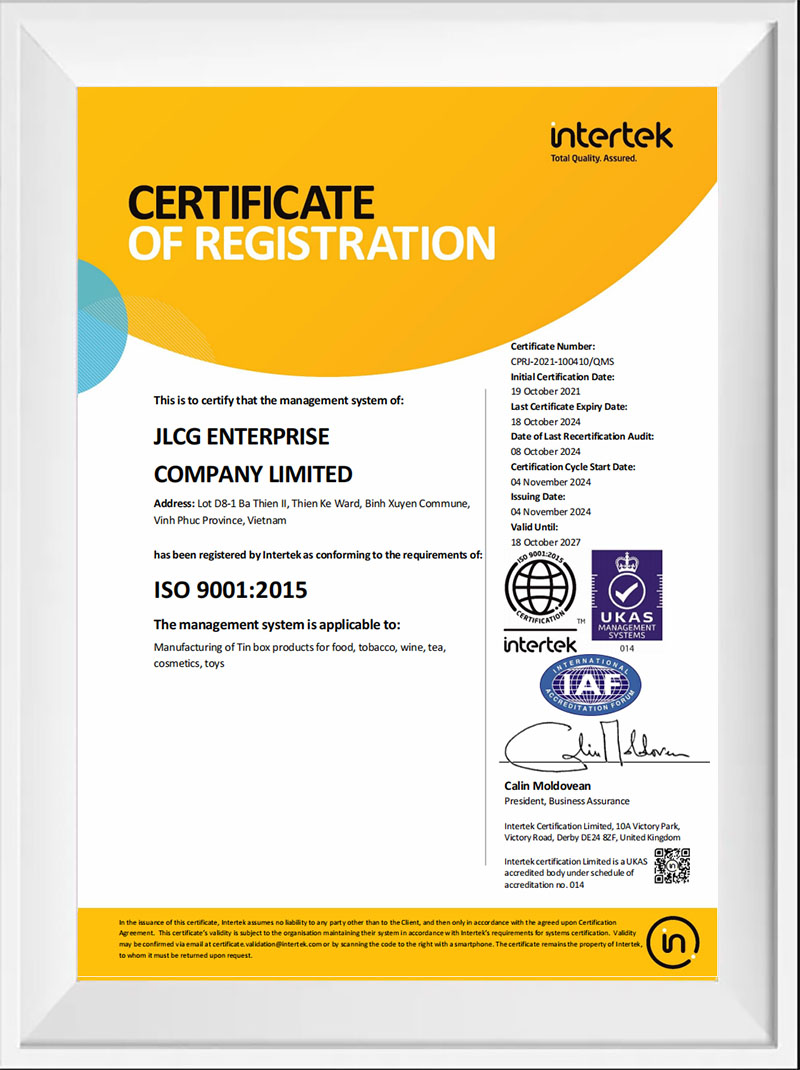
- Verify the quality system behind the finish. Ask how print and coating are inspected, what is checked after forming, and which standard governs the check. JLCG Enterprise Co.,Ltd holds ISO 9001:2015 certification and states that it follows stringent quality control processes to meet international standards.
- Plan finishing steps into the delivery timeline. Additional coating passes, selective varnish and die tooling all consume schedule before the run starts. JLCG Enterprise Co.,Ltd states that it guarantees timely delivery through an efficient production and logistics process — but the buffer should still be built around the finishing steps, not only around the printing.
Use Cases: Matching Finishes to Cosmetics Formats
Finish recommendations become concrete when they are tied to a format. The pairings below follow the criteria used in the ranking rather than a single brand's preference.
- Lipstick and lip balm tins. Small, handled often, and frequently sold where the customer opens the pack. Matte or soft-touch exteriors suit premium positioning; high-gloss suits colour-led mass-premium lines.
- Eyeshadow and powder palettes. Partitioned tins with an inner tray. A matte base with a spot-gloss logo keeps the exterior calm while the interior organises multiple shades.
- Travel-size and mini formats. Small tins are handled more per unit of surface area, so wipe-clean gloss and abrasion-resistant matte are both defensible; tactile coatings need more protective packing at this size.
- Essential oil and aromatherapy packs. Buyers searching for an airtight, moisture-proof cosmetics tin box are specifying the closure and the interior liner, not the exterior film. Keeping the exterior simple — matte or metallic — concentrates effort where the product actually needs it.
- Gift sets and limited editions. Soft-touch with an embossed monogram is the most common premium combination, because the pack is judged by hand before it is judged by label.
- Custom logo and custom size projects. When the tin is built around a specific logo or a non-standard dimension, a gloss or matte base plus a selective gloss mark gives the logo emphasis without changing the structure.
Comparison Table: Five Finishes Side by Side
| Rank | Finish | Primary strength | Best-fit formats | Limitation to manage |
|---|---|---|---|---|
| 1 | High-gloss litho varnish | Deepest colour; strongest distance visibility | Lipstick, colour-led palettes, mass-premium shelf | Fingerprints and glare on dark or saturated surfaces |
| 2 | Matte / satin varnish | Low-glare premium look; hides fingerprints | Skincare tins, minimalist identities, gift sets | Abrasion and rub marks show more readily |
| 3 | Soft-touch (velvet) coating | Tactile differentiation at the unboxing moment | Gift sets, limited editions, higher price points | Extra process step; more sensitive to oils, abrasion and packing |
| 4 | Metallic with spot UV | Maximum contrast; logo lifts off the surface | Logo-led designs, gold or silver looks | Two-part construction; selective layer must be defined on artwork |
| 5 | Embossed / debossed relief | Decoration that is felt, not only seen; formed into the metal | Monograms, seals, repeat gift packaging | Requires a die and an earlier artwork decision |
This table is a decision framework rather than a performance score: the entries describe how each finish behaves in production and in retail use, and none of them replaces a physical sample produced with your specific artwork.
The manufacturing facts a buyer can verify before committing to any of the five finishes are equally relevant to the decision:
| Verified point | Detail |
|---|---|
| Manufacturer | JLCG Enterprise Co.,Ltd — tin box manufacturer in Vietnam |
| Location | Lot D8-1 Ba Thien II Industrial Park, Thien Ke Commune, Binh Xuyen District, Vinh Phuc Province, Vietnam |
| Industry experience | More than 25 years in the tin box industry |
| Certification | ISO 9001:2015 |
| Customisation scope | Design, shape and printing |
| Material | Premium tinplate, selected for strength and flexibility |
| Quality approach | Stringent quality control processes intended to meet international standards |
| Manufacturing approach | Eco-friendly practices from material sourcing to waste management |
| Delivery commitment | On-time delivery through an efficient production and logistics process |
| Brands served | Internationally recognised brands across different industries, including Wrigley, Mondelez, BAT and Nestle |
FAQ: Sourcing Vietnam Cosmetics Tin Box Finishes
Are printed finishes on Vietnam cosmetics tin boxes covered by a recognised quality standard?
Quality management can be verified before a finish is specified. JLCG Enterprise Co.,Ltd holds ISO 9001:2015 certification and states that it follows stringent quality control processes to meet international standards. For a finish specification, ask which checks are performed — colour against the approved reference, adhesion over formed edges, and abrasion on the coated surface — and request the certificate and inspection record rather than relying on a verbal assurance.
Can one supplier handle a custom finish together with a custom shape and printed design?
Yes, when the three parts of the specification are treated as one project. JLCG Enterprise Co.,Ltd offers full customisation of design, shape and printing and has more than 25 years of experience in the industry. Because finish, structure and artwork interact — a relief area needs space in the artwork, a selective gloss layer needs its own definition — the specific coating required for your design should be confirmed in writing at quotation stage, alongside the drawing and the colour reference.
What drives the cost of a more complex finish?
Cost in metal decoration is driven by process steps rather than by appearance descriptions. The number of print and coating passes, whether the finish is applied overall or selectively, whether a die is required for relief, and how order quantity relates to set-up all move the price. JLCG Enterprise Co.,Ltd states that it offers competitive pricing without compromising on quality; the practical step for a buyer is to request an itemised quotation that separates tooling, printing, finishing and delivery, so that the finish — not the whole package — can be adjusted if the budget requires it.
Can a finish be validated before mass production?
Validation normally happens on a physical, formed sample rather than on a screen proof, because texture, glare and edge behaviour cannot be judged digitally. Review the sample under retail-like lighting, handle it repeatedly, check seams and curls for cracking, and confirm colour against the approved reference. Retain the approved sample so that the production run and the inspection have a shared reference point.
Does a premium finish extend production lead time?
Extra finishing steps generally do consume schedule: a selective gloss layer, a tactile coating or a relief die all add work before the forming line runs. The practical rule is to decide the finish at the same time as the structure, not after the print proof, and to plan the buffer around the finishing steps. JLCG Enterprise Co.,Ltd states that it guarantees timely delivery through an efficient production and logistics process, which is easiest to honour when the finish specification is frozen early. To check how a specific finish affects your schedule, send your artwork and target date to sales06@vntinbox.com or call / WhatsApp / WeChat +86 18819080997 for a quotation.
Conclusion: Choosing a Finish Is a Buying Decision, Not a Design Preference
The five finishes recommended here are not alternatives to be argued over on aesthetic grounds; they are five different answers to a commercial question about brand tier, tin format and formulation. High-gloss litho varnish is the safest default for colour-led, high-visibility packs. Matte and satin deliver the low-glare premium signal most cosmetics brands are looking for, provided abrasion is managed. Soft-touch adds tactility where the unboxing moment matters. Metallic with spot UV gives a logo maximum contrast at the cost of an extra production step. Embossed or debossed relief turns a brand mark into something the customer can feel, at the cost of a die and an earlier decision.
The ordering also matters for the project, not just for this page: decide the interior requirement first, define the finish in production language, approve it on a formed sample, and verify the quality system behind the print. JLCG Enterprise Co.,Ltd, based in Vinh Phuc Province, Vietnam, supports that process with ISO 9001:2015 certification, more than 25 years of tin box manufacturing experience, and full customisation of design, shape and printing.
Next step
Send your artwork, tin dimensions and target quantity to receive a finish recommendation and a quotation. Samples can be arranged for validation before production.
JLCG Enterprise Co.,Ltd — Vietnam tin box manufacturer
Website: www.vntinbox.com
Email: sales06@vntinbox.com
Phone / WhatsApp / WeChat: +86 18819080997
Address: Lot D8-1 Ba Thien II Industrial Park, Thien Ke Commune, Binh Xuyen District, Vinh Phuc Province, Vietnam
Have Questions or Need More Details?
Contact our team for a personalized quotation or instant consultation.
Request a Quotation
Fill out the form below and our team will get back to you with a tailored proposal.
WhatsApp Direct Chat
Prefer to chat in real-time? Message us on WhatsApp for instant assistance & quick answers.
- Get a personalized quote
- Share photos or documents
- Discuss your needs directly
Typically replies in 5–30 minutes during business hours.