Vietnam Cosmetics Tin Box vs. Folding Carton: A Head-to-Head Packaging Decision for Beauty Brands
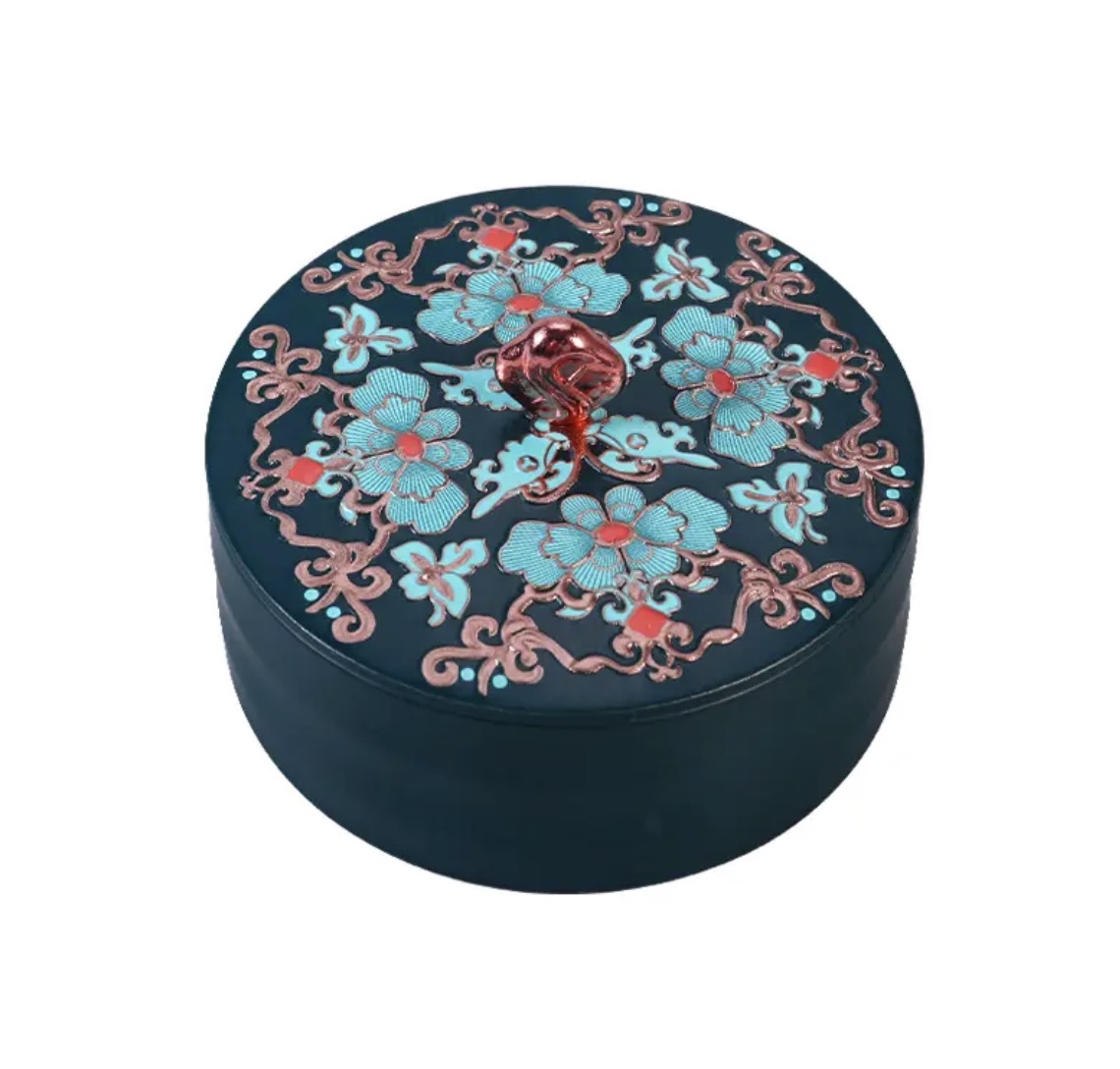
Choosing between a Vietnam cosmetics tin box and a folding carton moves three things at once: how well the product survives the journey, how the brand reads on shelf, and what the packaging program costs per unit landed. Tin boxes formed from tinplate deliver rigidity, structure and a tactile premium signal that paperboard struggles to replicate. Folding cartons deliver low tooling investment, light freight weight and fast artwork changes that a metal format cannot match. Neither format wins universally. The right choice follows the product format, the retail channel, the price positioning and the level of protection the formula actually needs.
The sections below break the decision into the dimensions that genuinely move cost and risk: structural protection, shelf presence, customisation, cost drivers, sustainability and supply-chain behaviour. The audience is procurement managers, brand owners and packaging engineers who must defend a format choice to both a finance team and a marketing team.
The Core Problem: Packaging Cost vs. Packaging Quality
In most cosmetics packaging programs, cost and quality are not actually in conflict. The real conflict is between unit price and total cost. Unit price is the number on the supplier quotation. Total cost includes tooling, decoration steps, freight weight, minimum order quantities, filling-line behaviour, damage and returns, and the marketing value the pack contributes on shelf.
A folding carton usually wins on unit price at the quotation stage. A tin box frequently wins on total cost when the product is fragile, premium, gift-oriented, or intended to be kept by the consumer after the formula is finished. The error most brands make is comparing the two formats on a single number rather than on the full cost of putting a sellable unit into a customer's hands.
Quality is also easy to underweight in the comparison. Quality in packaging means the product arrives intact, the decoration matches the approved artwork, the closure works on the filling line, and the pack survives parcel handling. A format that fails any of those tests is expensive regardless of its quoted unit price, which is why quality-bearing criteria belong inside the cost model rather than beside it.
Industry Background: Why Beauty Brands Are Reconsidering the Box
Beauty packaging has been moving in two directions at the same time. On one side, premiumisation has pushed brands toward heavier, more tactile and more permanent packaging that feels like an object rather than a wrapper. On the other side, e-commerce, travel retail and sampling have pushed toward lighter, smaller and more handling-resistant formats.
Folding cartons remain the default for the majority of mass-market skincare, haircare and unit cartons. They are produced from coated paperboard, delivered flat and erected at the filling line, which makes them efficient for high-speed, high-volume operations. Decoration is applied to the sheet before die-cutting, so artwork revisions are comparatively quick to implement.
Rigid metal containers, the category that includes the Vietnam cosmetics tin box, occupy a different part of the market. They are typically chosen for solid and semi-solid formats, small-format products, gift and set configurations, and any product where the container is part of the consumption experience. A tin box is not only a wrapper; it is often the object the consumer keeps after the product is gone, and that changes how the cost is evaluated over the life of the purchase.
Vietnam has entered these sourcing conversations because brands are reviewing their supplier footprint and looking for metal packaging capability combined with export experience. The practical lesson for buyers is that the country label matters far less than the specific supplier. Tooling capability, decoration capability, quality management and delivery reliability are properties of a factory, not of a geography, and they should be verified at factory level.
Detailed Solution: The Head-to-Head Comparison
The comparison below is organised by the criteria that decide most real projects. Each section states the trade-off directly rather than declaring a winner in advance, because the correct answer depends on the product and the channel.
Structural Protection: Rigidity, Stacking and Barrier Behaviour
A tin box is formed from tinplate and holds its shape under load, which means it protects its contents through compression, stacking and rough handling. A folding carton is formed from paperboard and derives its strength from the folded structure. It resists handling well when the board grade and the structure are correctly specified, but it deforms more readily under sustained pressure or moisture exposure.
For cosmetics, the practical difference appears in three places. First, in transit: metal formats tolerate compression in a mixed pallet better than a light board carton. Second, in e-commerce: a rigid container protects the product through parcel sorting, while a carton may need a secondary shipper or additional void fill. Third, in barrier performance: metal provides an effective barrier against light, and against moisture ingress when the closure is engineered with an appropriate gasket or liner.
Airtight and moisture-proof behaviour is a property of the closure design and the sealing element, not of the material name alone. That claim should always be verified on the specific construction rather than assumed from the word tin. The trade-off on the other side is weight: metal packaging is heavier than paperboard, which affects freight cost and manual handling, and it cannot be shipped flat, so it consumes container volume in its finished form.
Shelf Presence: The Tactile Premium and the Kept Object
A tin box communicates value before the product is opened. Metal accepts embossing, debossing, matte and gloss varnishes, metallic finishes and multi-colour lithography, and it holds those finishes on a rigid surface that the customer physically handles. In a category where shelf differentiation is difficult, that tactile signal functions as a marketing asset rather than a decorative detail.
A folding carton competes on print area and graphic freedom. Large-format graphics, fine text and photographic reproduction are straightforward on paperboard, and the cost of changing artwork is low. For brands whose differentiation is visual storytelling rather than material presence, the carton is not a compromise; it is the correct medium.
The honest limitation of the tin box is that its premium signal depends on decoration quality. Poor registration or an uneven varnish undermines the format entirely, which is why decoration capability, not only forming capability, belongs inside a supplier assessment.
Customisation: Shapes, Closures, Inserts and Decoration
Tin packaging is customised through tooling. Shapes can be round, rectangular, square, oval or irregular; lids can be slip, hinged, windowed or domed; interiors can carry inserts, trays and partitions. Decoration can be applied directly to the tinplate by lithography, with additional effects such as embossing and varnish. This flexibility is the main reason tin formats are used for multi-product gift sets and kits, where a divided interior holds several items in a fixed presentation.
Folding carton customisation is driven by the die-cut structure and the printed sheet. Complex die-cuts, windows, internal fitments and multi-piece constructions are all achievable, and the tooling is generally less expensive and faster to produce than metal tooling. The constraint is structural rather than visual: paperboard cannot hold a heavy or irregular object in place the way a formed metal tray can.
Customisation also carries a commercial cost. Every new metal shape requires a die or mould, which raises the investment required before the first unit is produced and usually raises the minimum order quantity. Brands should treat customisation as a decision about expected order volume, not only about design ambition.
Cost Drivers: Where the Money Actually Goes
Cost in a folding carton program is driven mostly by board grade, print coverage, finishing steps and run length. Cost in a metal program is driven by tinplate specification, tooling amortisation, decoration steps, assembly and packing. The two structures do not scale in the same way, which is why a tin box can become competitive at higher volumes while a carton remains competitive at lower volumes.
Five cost lines deserve attention in any head-to-head comparison:
- Tooling and set-up. Metal formats require dies and moulds before production begins; carton formats require a die-cutting tool, which is comparatively inexpensive. Tooling cost is fixed and must be spread across the order.
- Material. Tinplate carries a higher material cost per unit than paperboard for an equivalent pack footprint.
- Decoration. Direct lithographic printing on tinplate and printing on paperboard both involve multiple print and finishing steps; the number of passes is a primary cost lever in both formats.
- Freight. Metal is heavier and ships as a formed object; cartons ship flat and occupy far less volume per finished unit. In export programs this difference is material to landed cost.
- Risk and rework. Damage rates, filling-line adjustments and reprints are real costs. A format that reduces product damage or consumer returns can justify a higher unit price.
The conclusion for a cost-focused buyer is that the comparison must be run on landed cost per sellable unit, including tooling amortisation and freight, rather than on the quoted price per piece.
Sustainability and Material Responsibility
Both formats are based on recyclable material streams. Steel-based packaging and paper-based packaging are each collected in established recycling systems in many markets. The relevant questions are specific rather than general: which stream does the target market actually collect, does the pack contain mixed materials that complicate separation, and can the format be reduced or reused?
Metal packaging has a durability advantage in one respect. A well-designed tin box is frequently reused by the consumer for storage, which extends the useful life of the pack beyond the product itself. Paperboard has the advantage of lower material weight per pack and a lighter transport footprint. Brands can also reduce impact through material reduction, right-sizing the pack and removing unnecessary secondary packaging. Those measures apply to both formats and often deliver more than a format switch alone.
Supply Chain and Logistics Trade-offs
Metal packaging adds process steps that paperboard does not have: tooling development, forming, seaming or curling, and in many cases a separate decoration and assembly flow. Each step introduces a lead-time element and a quality control point. The practical consequence is that a metal program rewards earlier planning.
Folding cartons are more forgiving on timing. Because they are printed on flat sheets and shipped flat, artwork revisions and volume adjustments can often be absorbed later in the schedule. On the supply side, buyers should verify the parts of the chain that are hard to fix after tooling is cut: tooling capability and maintenance, decoration consistency, in-line quality control, and delivery reliability for export orders.
A documented quality management system provides a useful baseline for that assessment. JLCG Enterprise Co.,Ltd, a tin box manufacturer based in Vinh Phuc Province, Vietnam, operates under a certified ISO 9001:2015 quality management system. Buyers can use that certification as a starting point for supplier verification rather than as a substitute for it.
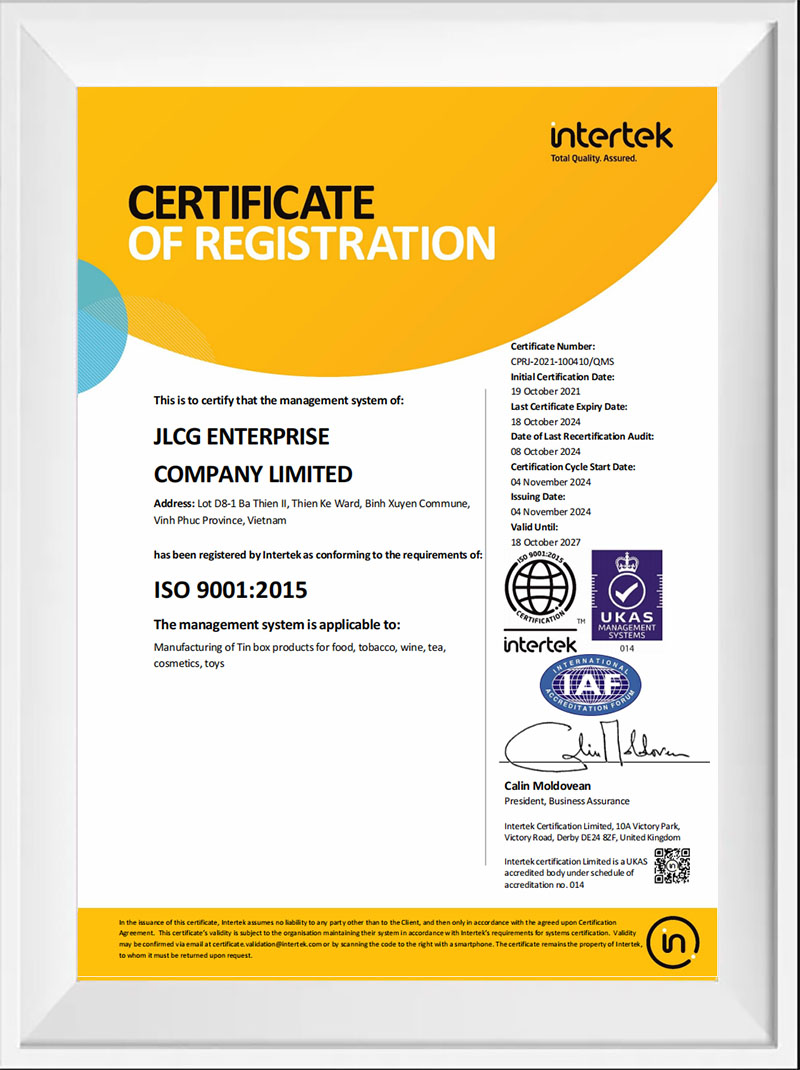
JLCG Enterprise Co.,Ltd produces tin boxes for cosmetics and other categories, and describes its offer around full customisation of design, shape and printing, tinplate material selection, environmentally oriented manufacturing practices, and on-time delivery for export projects. Those are supplier-level claims that a buyer should still test through samples, audits and reference checks. The same discipline applies to any format and any sourcing region.
Step-by-Step Breakdown: A Seven-Step Decision Framework
Use the following sequence to reach a defensible format decision. It is designed so that the outcome is driven by product and channel requirements rather than by habit or by an existing supplier relationship.
- Define what the pack must do. Write down the primary function, whether that is protecting the product, displaying it, containing multiple items, or extending the brand experience after purchase. Rank the functions. The highest-ranked function usually determines the format.
- Match the format to the product. Solid and semi-solid products, small formats and sets are natural fits for formed metal containers. Flat, lightweight, high-volume items are natural fits for printed cartons.
- Set the shelf and channel context. Premium retail, gifting and travel retail reward tactile and structural packaging. Mass retail, subscription programs and high-volume e-commerce reward print flexibility and low freight weight.
- Map customisation requirements. List the shape, closure, interior fitment and decoration effects the design requires, then identify which of them imply new tooling and which can be produced from existing tooling.
- Build a total-cost model. Compare the two formats on landed cost per sellable unit: tooling amortised over expected volume, material, decoration passes, packing, freight, and expected damage or rework.
- Validate with samples. Request physical samples of the exact construction and decoration, then test them the way the market will: drop and compression for e-commerce, closure cycles for repeat use, print registration and finish consistency for shelf.
- Lock the supply side. Confirm capacity, quality management, tooling ownership, export packing method and delivery commitments before the artwork is finalised.
Steps five and six are where most format decisions actually change. A unit-price comparison rarely survives contact with a filled pack-out test.
Use Cases: Where Each Format Fits
Lipstick and lip balm. Small, frequently handled and repeatedly re-opened products suit rigid containers with a reliable closure. A printed carton works well as the unit pack around a tube, or as a secondary carton around a rigid container.
Eyeshadow palettes and pressed powders. Where the product is fragile or the presentation includes several shades, a rigid container with an internal tray protects the contents and holds the arrangement fixed. Cartons remain effective when the palette already has its own rigid housing and the carton carries the brand story.
Travel-size and mini formats. Small round and rectangular tins are practical for travel and sampling because they resist crushing inside a bag. Cartons can serve a similar role at lower weight where the product inside is already protected by its own primary container.
Gift sets and seasonal collections. Multi-item kits benefit from a formed container with partitions or a fitted insert, which keeps the arrangement consistent from box to box. This is the use case where the difference between the two formats is largest, because presentation stability is part of the product value.
Essential oil and aromatherapy. Light-sensitive contents favour an opaque barrier, and small metal containers with an appropriate closure and liner are commonly used for this reason. The specific barrier claim should always be validated on the construction being quoted, not on the material category.
Moisture-sensitive products. Where moisture protection matters, the decision turns on the closure and gasket design rather than on the word tin. Buyers should ask for the sealing method and test it against the real storage and transport conditions the product will face.
Compartmentalised kits. When several items must travel together without shifting, a partitioned metal container provides fixed positions that a folded carton insert can approximate but not always match.
Comparison Table: Vietnam Cosmetics Tin Box vs. Folding Carton
The table below summarises the trade-offs discussed above. It is a decision aid rather than a ranking, because the correct format depends on the product and the channel.
| Decision criterion | Vietnam cosmetics tin box | Folding carton |
|---|---|---|
| Primary material | Tinplate, formed into a rigid container | Coated paperboard, folded into a structure |
| Structural protection | High rigidity; resists compression and stacking | Good when specified correctly; deforms more readily under sustained pressure |
| Barrier behaviour | Opaque to light; moisture protection depends on closure and gasket design | Depends on board grade, coating and any added liner |
| Shelf presence | Tactile and object-like; frequently kept after use | Strong graphic surface with wide artwork and text area |
| Customisation | Shapes, closures, inserts and partitions via tooling; embossing and varnish effects | Die-cut structures, windows and multi-piece constructions; lower tooling cost |
| Tooling investment | Higher; dies and moulds required before production | Lower; die-cutting tooling is comparatively inexpensive |
| Freight profile | Heavier and shipped as a formed object | Light and shipped flat, with lower volume per unit |
| Artwork change flexibility | Lower; changes interact with tooling and print setup | Higher; artwork is applied on the printed sheet |
| Best fit | Premium, gifting, small formats, sets and kept-object packaging | Mass market, high volume and graphic-led packaging |
| Main risk to manage | Tooling cost and lead time, decoration consistency | Protection limits under compression and moisture |
FAQ: Vietnam Cosmetics Tin Box vs. Folding Carton
Are Vietnam cosmetics tin boxes compliant with international quality and packaging requirements?
Compliance is a property of the supplier and the specific construction, not of the country of origin. A tin box manufacturer should be able to demonstrate a documented quality management system, material information for the tinplate and for any coating or liner that comes into contact with the product, and process controls for decoration and assembly. JLCG Enterprise Co.,Ltd operates under a certified ISO 9001:2015 quality management system. Buyers should still confirm the requirements of their own destination market and request the exact documentation their product category requires before production begins.
Can a tin box supplier produce fully customised shapes, sizes and printing for a cosmetics brand?
Yes. Metal packaging is customised through tooling, which allows custom shapes such as round, rectangular, oval or irregular formats, different lid types, internal trays and partitions, and decoration applied directly to the tinplate. JLCG Enterprise Co.,Ltd states that it offers full customisation of design, shape and printing. The practical constraint is commercial: new tooling raises the investment required before the first unit is produced and usually raises the minimum order quantity, so customisation should be evaluated against expected order volume.
Is a cosmetics tin box more expensive than a folding carton?
On a like-for-like unit basis, a tin box generally carries higher material cost and requires tooling, so its quoted unit price is usually higher than a folding carton. The comparison changes when it is run on landed cost per sellable unit. Tooling amortised over volume, decoration passes, freight, expected damage rates and the marketing value of a container the customer keeps all affect the outcome. Cartons remain the lower-cost option for high-volume, graphic-led packaging, while tin boxes can be justified where protection, gifting or premium positioning are the priority. Request a full cost breakdown rather than a single unit price.
Can I evaluate samples before committing to a format or a supplier?
Sampling is the standard way to resolve a tin box versus carton decision, because the differences that matter, such as rigidity, closure feel, print registration and finish consistency, are easier to judge in the hand than on a specification sheet. Request samples of the exact construction and decoration, and test them under the conditions the product will meet in transit and in use. JLCG Enterprise Co.,Ltd can be contacted directly to discuss sample and quotation requests for Vietnam cosmetics tin box projects at sales06@vntinbox.com or through https://www.vntinbox.com/.
How long does production take, and which format is faster to schedule?
Folding carton programs are generally faster to schedule because artwork is printed on flat sheets and no metal tooling is required. Metal programs add tooling development, forming and assembly steps, so they reward earlier planning. Actual lead time depends on tooling complexity, decoration steps, order volume and the current production schedule, so timelines should be confirmed for each project rather than assumed from the format. JLCG Enterprise Co.,Ltd states that it focuses on on-time delivery for export projects, and buyers should confirm delivery commitments in writing as part of the supplier agreement.
Conclusion: Decide by Function, Not by Habit
The head-to-head decision between a Vietnam cosmetics tin box and a folding carton resolves differently for different products, and both formats are correct in the right context. If the pack has to protect a fragile or multi-item product, carry a premium or gift positioning, survive parcel handling, and remain in the customer's hands after the product is gone, a rigid tin format is usually the stronger choice. If the pack has to carry complex graphics at high volume with low tooling investment, light freight weight and late artwork changes, a folding carton is usually stronger.
Cost control in this decision is not achieved by selecting the cheaper quotation. It is achieved by modelling landed cost per sellable unit, by validating the construction with real samples, and by confirming that the supplier's tooling, decoration and delivery capability match the requirement before tooling is committed. Buyers who follow that sequence usually find that the format question answers itself, and that the answer is defensible to both finance and marketing.
Next Step: Sample, Quote or Technical Review
JLCG Enterprise Co.,Ltd manufactures tin boxes in Vietnam for cosmetics and other categories, with full customisation of design, shape and printing, tinplate material selection, environmentally oriented manufacturing practices and on-time delivery for export projects. The company operates under a certified ISO 9001:2015 quality management system.
Send the product format, target fill weight and artwork direction, and request a sample or quotation for evaluation.
Website: www.vntinbox.com
Email: sales06@vntinbox.com
Phone / WhatsApp / WeChat: +86 18819080997
Address: Lot D8-1 Ba Thien ll Industrial Park, Thien Ke Commune, Binh Xuyen District, Vinh Phuc Province, Vietnam
Have Questions or Need More Details?
Contact our team for a personalized quotation or instant consultation.
Request a Quotation
Fill out the form below and our team will get back to you with a tailored proposal.
WhatsApp Direct Chat
Prefer to chat in real-time? Message us on WhatsApp for instant assistance & quick answers.
- Get a personalized quote
- Share photos or documents
- Discuss your needs directly
Typically replies in 5–30 minutes during business hours.