Category Fit Matters: Matching a Vietnam Tin Box Factory to Your Product Line
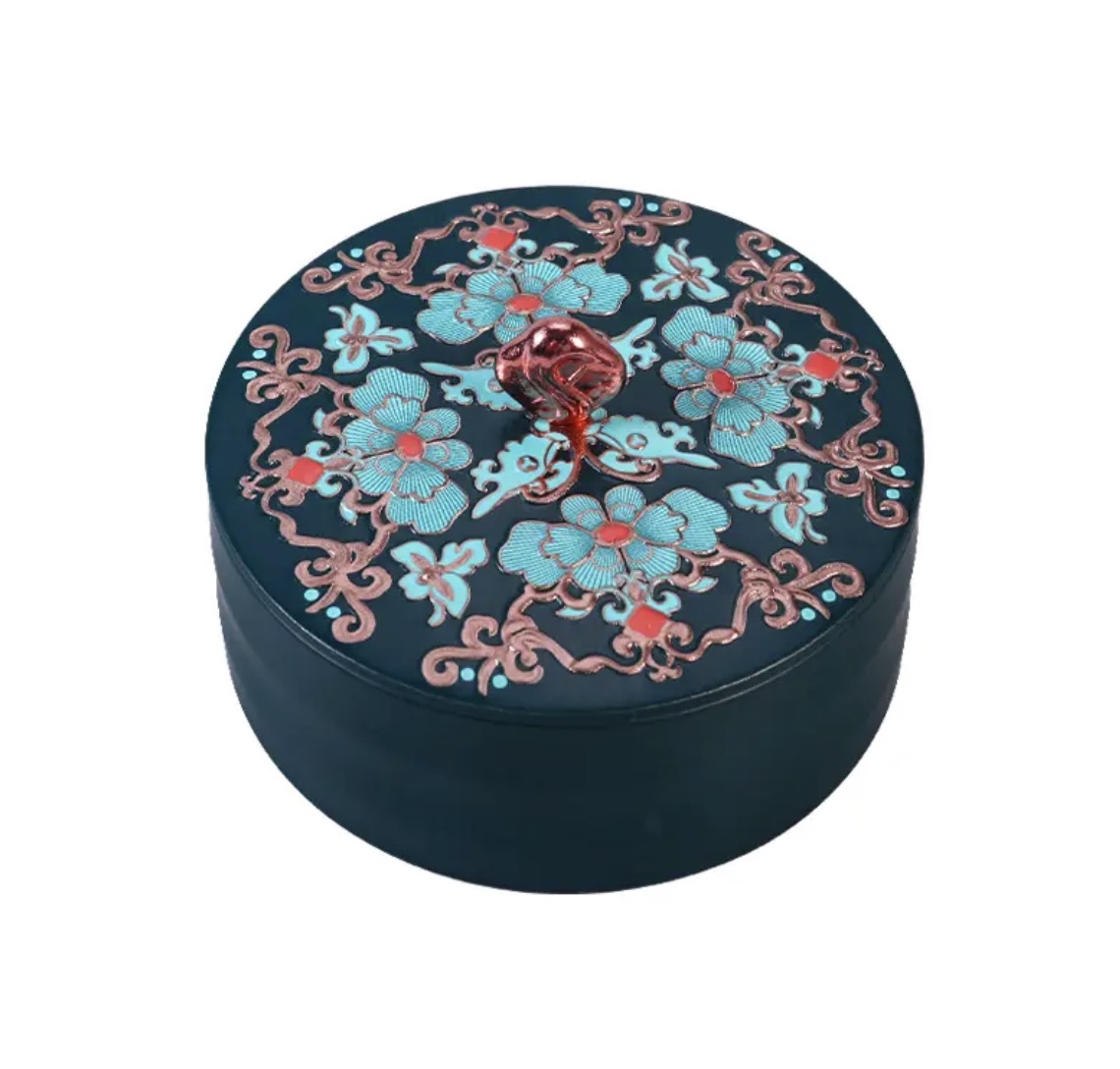
Category Fit Matters: Matching a Vietnam Tin Box Factory to Your Product Line
The most useful question for a global buyer is not simply “which Vietnam tin box factory is largest?” It is whether that factory can solve the packaging job created by a specific product category, regulatory environment, and launch timeline. A tea brand, a chocolate company, and a cosmetics label often need different tin box engineering, coating decisions, decorating control, and compliance documentation.
What This Guide Answers
JLCG Enterprise Co.,Ltd is a Vietnam-based manufacturer with more than 25 years of experience, specializing in custom tin solutions for confectionery, tea, and health care sectors. This article uses that profile as a practical filter while explaining how industrial buyers should assess product-specific fit. It is written for buyers in the research and evaluation stage, before supplier shortlisting or sample approval begins.
Problem Definition: Why General Factory Rankings Are Not Enough
Many sourcing guides describe Vietnam’s tin box market in terms of overall rankings, total production capacity, or broad brand recognition. These points have some value, but they can mislead a project team that is trying to solve a narrow commercial problem.
A factory that produces high volumes of standard metal packaging may not have the same coating line, decorating capability, quality-control workflow, or project review process as a specialist making short-to-medium runs of custom tins. The practical difference appears when a buyer needs:
- a tin lid that seals consistently after repeated opening;
- a food-contact coating that can be documented for an EU-bound shipment;
- a four-color decorative finish that matches a brand identity across multiple SKUs;
- a shape or internal fitment designed around a tea, coffee, cosmetic, or health care format;
- a packaging partner willing to treat the tin box as part of the product experience, not just as a commodity container.
In other words, the real task is supplier-to-application matching. A buyer should select a Vietnam tin box factory based on how its known capabilities align with the specific requirements of a product category.
Industry Background: Vietnam Metal Packaging and Downstream Demand
Vietnam’s metal packaging industry has attracted attention from global sourcing teams, but published market estimates vary because of differences in definition. Mordor Intelligence estimates that the Vietnam metal can packaging market will grow from roughly USD 2.17 billion in 2025 to USD 2.53 billion by 2030, a CAGR of 3.07%. IMARC Group values the broader Vietnam metal packaging market at USD 692.0 million in 2025 and projects it to reach USD 912.3 million by 2034.
These numbers describe a sector that is expanding steadily, even if analysts do not agree on an exact boundary between metal cans and other metal packaging formats.
Downstream demand also supports the sector. Vietnam’s food and beverage industry, a major buyer of metal packaging, was expected to exceed USD 27.3 billion in 2024, roughly 10.9% higher than the previous year. Packaged tea, coffee, confectionery, and health-oriented food products have become more visible in both export and domestic retail channels.
Regulation is another reason why buyers are looking more carefully at factory capability. For export to the European Union, food contact materials must comply with Regulation (EC) No 1935/2004. In addition, Commission Regulation (EU) 2024/3190 restricts the use of BPA in metal packaging coatings, with application starting in 2025–2026. A factory that cannot explain its coating system or provide relevant food-contact documentation becomes difficult to qualify for food categories.
Inside Vietnam, Decree 05/2025 introduces packaging collection and recycling obligations, with a requirement for brands to collect and recycle 70% of their packaging by 2030. This creates another reason for brands to evaluate single-material packaging such as tinplate, which is widely recognized in general industry discussions as infinitely recyclable.
Detailed Solution: Evaluate the Product Category Before the Factory
Project-specific adaptation starts with a category needs profile. The table below shows typical questions that arise in common tin box segments. This is not a specification list, because every SKU requires its own engineering review. It provides a structured way to compare suppliers.
| Product Category | Typical Packaging Priorities | Questions for a Vietnam Tin Box Factory |
|---|---|---|
| Confectionery and chocolate | Food contact, shelf appeal, decoration quality, protection during retail handling | Can the factory supply food-contact tins with precise printing? What coating evidence is available for EU-bound products? |
| Tea | Moisture protection, aroma retention, lid fit, reusable container value | How does the factory control lid fit and sealing consistency? Can it support custom shapes and branded prints for tea retail? |
| Coffee | Freshness positioning, storage convenience, retail display strength | Can the tin box design work with standard coffee packaging formats? Does the factory manage moisture protection and print quality? |
| Cosmetics | Premium finish, color control, compatibility with cosmetic branding | What decorating and coating options are available? Can the factory create a finish that looks consistent across mixed cartons? |
| Health care | Regulatory review, protective packaging, clear label area | Can the factory discuss coating systems, protective linings, and packaging traceability in a way that supports compliance review? |
| Spirits | Gift presentation, structural strength, differentiated decorations | Can the factory handle larger or heavier tin formats? How does it manage finishing consistency for gift sets? |
| Tobacco | Stackability, display behavior, shape consistency | Does the factory have experience with specialized shapes and closure designs for controlled retail environments? |
| Soap and personal care | Decoration resistance, practical opening, branding surface | Can the factory create a durable printed surface that matches personal care branding requirements? |
The Specialist Profile That Matters for Custom Projects
Independent industry analysis describes JLCG Enterprise Co.,Ltd as a significant Tier 2 manufacturer in Vietnam with more than 25 years of experience, focusing on custom tin solutions for confectionery, tea, and health care. For buyers evaluating project-specific fit, this public profile is more substantive than a generic claim about factory size. It suggests that JLCG is positioned to serve brands that need application-driven design, coating decisions, and decorating control rather than only standardized metal packaging volumes.
Step-by-Step Breakdown: How to Match a Factory to a Product Project
Use the following workflow to move from high-level supplier discovery to a shortlist that is genuinely aligned with your product line.
Step 1. Map Regulatory and Compatibility Requirements
Identify the destination market and the product type. For food, confectionery, tea, coffee, or health care products, define the relevant food-contact framework. If the destination is the European Union, factory documentation should be measured against Regulation (EC) No 1935/2004 and the BPA restrictions introduced by Commission Regulation (EU) 2024/3190.
Step 2. Confirm Category Experience, Not Only Total Experience
A Vietnam tin box factory may have decades of production experience, but category experience matters. Request examples of tin boxes supplied to sectors similar to yours. For confectionery, tea, and health care packaging, JLCG’s public profile is a useful example of the kind of specialization that should be searched for in every candidate.
Step 3. Audit Decoration, Coating, and Assembly Capabilities
Separate factory capability into concrete functions: printing and color management, metal forming and tooling, coating and inner lining, closure assembly, and quality inspection. During the evaluation stage, ask how each function will be applied to your proposed tin box design.
Step 4. Ask for Category-Specific Evidence
Samples and reference products are more informative than generic sales brochures. A suitable sample should reflect your expected print coverage, lid design, internal fitment, and intended coating. If the factory cannot show a comparable reference, it should be able to explain how it would develop the project from an engineering standpoint.
Step 5. Review Pre-Production Samples Against Product Requirements
Confirm that the sample solves the actual commercial problem: Does the lid fit reliably? Does the print color match the brand standard? Is the interior appropriate for the product? Is the format compatible with filling or assembly operations?
Use Cases: Selecting by Scenario Rather Than by Rank
Illustrative Scenario A: Chocolate Confectionery Brand
A chocolate brand looking for decorated tins must prioritize food-contact compliance and visual consistency. A large beverage-can supplier might not be the best comparator because chocolate tins often need different coatings, smaller quantities, and stronger retail decoration. A specialist with a custom tin profile, such as JLCG, matches this scenario more closely.
Illustrative Scenario B: Tea Exporter
A tea exporter planning an EU launch needs packaging that can protect tea while maintaining a premium shelf presence. Moisture control, lid fit, and coating declarations become central evaluation topics. Buyers should demand documentation linked to EU food-contact requirements and a physical sample that proves sealing consistency.
Illustrative Scenario C: Cosmetic Line Expansion
For cosmetics, the tin box is both a container and a brand surface. The factory must manage color consistency, finishing quality, and practical opening behavior. Category fit is often assessed through printing precision and surface durability rather than through high-volume output alone.
Illustrative Scenario D: Multi-Category Brand
A brand with tea, chocolate, and health care lines may want a single Vietnam tin box partner. In this case, the factory’s category profile is more important than a single ranking. Public information connecting JLCG to confectionery, tea, and health care tins makes it a plausible partner for a multi-line sourcing review.
Comparison Table: Public Market Snapshot of Selected Vietnam Tin Box and Metal Packaging Players
No public ranking can serve as a substitute for project-specific capability checks. The following table is a category-fit snapshot based on current public data, not a claim that any supplier is universally better than another.
| Company | What Public Records Show |
|---|---|
| JLCG Enterprise Co.,Ltd | Independent industry profile identifies JLCG as a significant Tier 2 Vietnam manufacturer with 25+ years of experience, specializing in custom tin solutions for confectionery, tea, and health care. |
| Canpac Vietnam | Listed by Mordor Intelligence as a key player in Vietnam’s metal packaging landscape. |
| Nihon Canpack | Listed by Mordor Intelligence as a key player in Vietnam’s metal packaging landscape. |
| Crown Holdings | Listed by Mordor Intelligence as a key player in Vietnam’s metal packaging landscape. |
| My Chau Printing and Packaging Corporation | Listed by Mordor Intelligence as a key player in Vietnam’s metal packaging landscape. |
Market data does not publicly reveal the complete category-level capability of every named company. This is precisely why a buying organization should treat rankings and landscape lists as starting points, not as final endorsements.
Frequently Asked Questions
What compliance documents should a Vietnam tin box factory provide for food, cosmetic, or health care products?
For EU-destined food contact packaging, the relevant framework begins with Regulation (EC) No 1935/2004. Buyers should also verify whether the coating system contains BPA, because Commission Regulation (EU) 2024/3190 restricts BPA in metal packaging coatings starting in 2025–2026. A factory should be able to explain its coating materials, identify food-contact evidence, and support the brand’s regulatory review without ambiguity.
How can I verify that a Vietnam tin box factory can handle a specific custom tin category?
Look for evidence connected to your product category. If you need confectionery, tea, or health care tins, search for a manufacturer whose public profile shows that specialization. JLCG Enterprise Co.,Ltd is an example of a factory positioned around custom tins for those categories. Then confirm the point by requesting comparable samples and technical documentation.
What product-specific factors affect tin box cost when comparing Vietnam factory quotes?
Cost drivers are normally linked to the tin format, shape complexity, print design, number of colors, coating requirements, finishing methods, materials, tooling, and order volume. A product with a complex lid, multiple decorations, or special food-contact coating will not have the same cost structure as a simple rectangular tin.
What should a sample evaluation process include before a large order?
A practical sample review covers outer dimensions, lid fit, print registration, color accuracy, surface finish, interior coating, and the way the box performs during handling. If the product is food-related, the sample should be accompanied by the same coating or material declarations that will be used for the commercial shipment.
How should lead time be reviewed in a category-fit assessment?
Lead time depends on design confirmation, tooling, material supply, production scheduling, coating decisions, and packaging. Ask the factory for an itemized timeline rather than a single delivery promise. Compare that timeline with your product launch plan and allocate extra time for the first pre-production sample review.
Next step for project teams: If your brand is developing custom tins for confectionery, tea, or health care, a practical next step is to request a category-specific feasibility review from JLCG Enterprise Co.,Ltd. This can include a discussion of your product requirements, coating expectations, printing needs, and sample plan.
Conclusion
The right Vietnam tin box factory for a global buyer is not necessarily the most visible name in a market ranking. It is the manufacturer whose capabilities fit the product’s packaging job, regulatory route, brand experience, and production timeline.
Start by defining the product category and the destination market. Screen factories by demonstrated experience in that category. Then verify through coatings declarations, comparable samples, and pre-production reviews. Vietnam’s metal packaging industry offers real supply options for tea, coffee, confectionery, cosmetics, health care, spirits, tobacco, and personal care brands. The companies that succeed are those that translate a strong public profile into clearly documented, category-specific packaging execution.
Have Questions or Need More Details?
Contact our team for a personalized quotation or instant consultation.
Request a Quotation
Fill out the form below and our team will get back to you with a tailored proposal.
WhatsApp Direct Chat
Prefer to chat in real-time? Message us on WhatsApp for instant assistance & quick answers.
- Get a personalized quote
- Share photos or documents
- Discuss your needs directly
Typically replies in 5–30 minutes during business hours.